A surf day on Samaná’s north coast
Surfing in Las Terrenas: Planning Your First Surf Day
Plan a surf session on Samaná’s north coast: choose instruction for your experience, confirm the actual beach meeting point and fit equipment, transport and companions into the day.
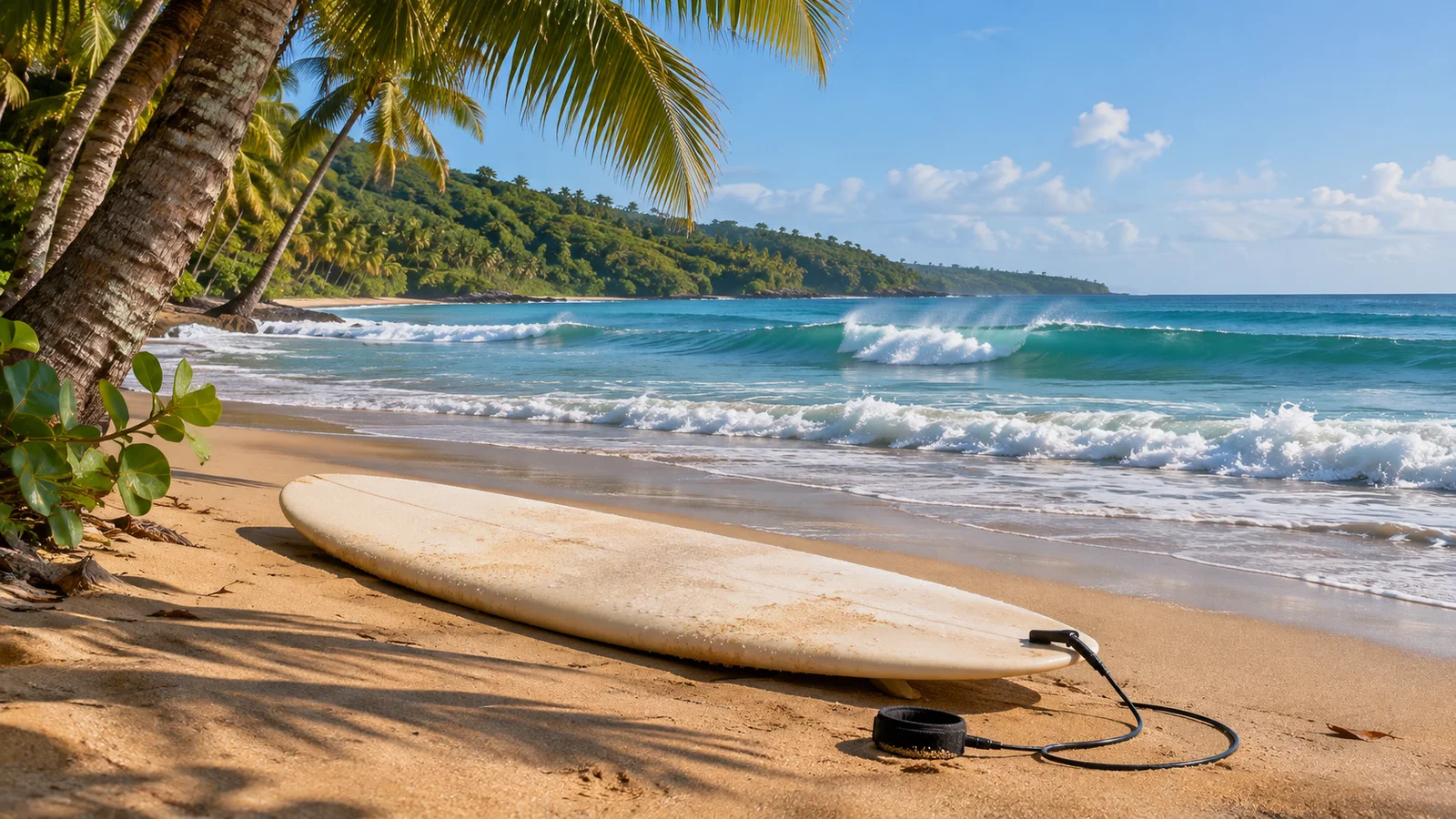
Make surfing the activity, not just another beach stop
Surfing gives a Las Terrenas beach day a different purpose: learning to read a breaking wave, handling a board and spending time practising rather than simply choosing somewhere to swim. Las Terrenas is on the Atlantic side of the Samaná Peninsula, where surfing is one of the water activities to investigate. Decide whether you want a first lesson, a session suited to existing experience or a day accompanying someone who surfs. Those are different plans, even if everyone travels to the same beach.
The Las Terrenas visitor guide places this north-coast base within the wider peninsula. This article focuses on planning a surf session from that base, not ranking every Samaná beach. Surfing on a board using breaking waves is distinct from kitesurfing with a kite and from stand-up paddleboarding with a paddle. Ask for the activity you actually want rather than assuming that any water-sports offer covers it.
Name the beach section before choosing the meeting point
Playa Bonita and Playa Cosón are beach names you may encounter when investigating the Las Terrenas coast. They describe coastal areas, not a single interchangeable surf lesson location. A place recommended for an experienced surfer is not automatically suitable for a first lesson. Ask the provider to identify the actual section, how to reach it and where the instructor meets the group. Conditions and the proposed activity matter more than a general beginner-friendly label.
Use the comparison of Samaná beaches to understand the surrounding settings and options for time ashore. Do not turn that beach comparison into an assessment of surf conditions. Your accommodation may be on the same named beach without being next to the meeting point. Confirm any walking from the road, where belongings can stay and the return location rather than asking a driver to find a board somewhere along the shoreline.
Choose instruction for your actual experience
For a first session, describe your swimming confidence, time spent in the sea and any previous board experience. Ask how the instructor assesses suitability, how much preparation takes place on land and how participants are supervised in the water. A first attempt is about learning the process, not a promised number of waves or a guarantee that you will stand up. Be clear about the language in which you need to understand explanations and instructions.
If you have surfed before, explain what you can currently do rather than relying only on a label such as intermediate. Discuss the sort of waves and board you normally use, how recently you surfed and whether you want coaching or equipment rental. Renting a board is not the same arrangement as a supervised lesson. Ask what support is provided and who decides whether the proposed location and conditions match your experience.
Separate teaching, equipment and the rest of the quote
Ask whether the offer is for an individual lesson, a group lesson or equipment alone, and how many people share the instruction. Confirm the session format, what the stated duration includes and whether equipment fitting or beach preparation takes place within that time. The word private should describe the instruction itself if that is what you are buying; a private car to the beach does not make a group lesson private.
Get an equipment list for the actual offer: the board selected for you, leash and any clothing or protective equipment the provider supplies. Ask about fit, the use of your own gear and responsibilities for damage or loss before accepting a rental. Transport, photographs, food, drinks, showers and somewhere to leave belongings are separate questions. A beach setting or a hotel nearby does not establish access to those facilities, and this guide does not establish a MySamana surf-course product.
Plan around conditions rather than a guaranteed surf calendar
The time of year can influence a surf holiday, but it does not determine whether a particular beach section suits your session on a particular day. Wind, swell, tides and local conditions belong in the provider’s assessment. Ask when the location and meeting time will be confirmed and what happens if they need to change. A sunny beach day is not evidence that the waves suit a novice; rain alone is not the same thing as unsuitable surf.
Keep the alternative practical. A change might mean another agreed time, a different suitable arrangement or no session, according to the booking terms and current assessment. Do not move to another beach independently merely because waves look smaller. For a day when you choose a different activity, the rainy-day planning guide offers ways to rethink your Samaná plans without promising that any particular water activity will operate.
Fit the session to your accommodation and companions
Give the transport provider the confirmed surf meeting point, not only Las Terrenas or a beach name. If the activity can move according to conditions, agree how you will receive the update before the vehicle leaves. The guide to getting around Samaná helps distinguish an arranged journey from a vehicle that stays available. If you need a quoted road journey, compare Samaná private transfers, confirming whether boards, waiting and the return can be accommodated; tuition remains a separate arrangement.
For companions who will not surf, choose an enjoyable shore-based plan without assuming they can use the provider’s equipment or a nearby hotel’s facilities. Check shade, toilets, meals and a clear place to meet afterwards. A session and lunch can be the main shape of the day. The guide to one day in Las Terrenas helps you connect local time with the actual starting point, rather than adding a cross-peninsula excursion between lesson and pickup.
Pack for the activity and agree a manageable pace
Confirm the provider’s clothing and equipment advice before packing. Bring drinking water, sun protection, a towel and a change of clothes, and keep valuables to what you can store as agreed. Ask whether you should arrive already changed and what facilities are available afterwards. Footwear for reaching the meeting point is a separate question from equipment worn during the session; avoid buying specialised gear before you know what the provider requires.
Leave room to rest and decide how much activity you want afterwards. For families or a mixed-ability group, make the least experienced person’s needs part of the discussion before choosing a shared arrangement. Tell the provider about relevant concerns and ask about their acceptance and supervision process. Do not treat a photograph of children on boards, a small-looking wave or confidence in a pool as a substitute for that conversation.
Keep a short written checklist before paying
Your confirmation should identify the activity, provider, participants, date or agreed window, exact meeting arrangements, instruction language, equipment and total price. Ask whether charges are per person or per group and which services are separate. Establish the payment, cancellation, weather-change and no-session terms in advance. Save a contact method and the instructions you will need if the meeting point changes.
Keep course arrangements and transport arrangements consistent, especially if they come from different providers. Confirm who communicates a change, whether your return pickup must be updated and how equipment travels if needed. MySamana’s existing tour and transfer pages can help with wider peninsula plans; they do not establish that surfing tuition, a particular school or a given beach session is included in an enquiry.
Do you need surfing experience for a first lesson?
A first lesson is intended to introduce the activity, but acceptance still depends on the provider’s assessment, your actual swimming ability and the proposed conditions. Explain that you are new, ask how teaching and supervision work and confirm the instruction language. No previous experience is not the same thing as every person being suited to every session.
Is a surfboard included?
Only if the actual offer says so. A lesson, equipment rental and transport can be separate purchases. Confirm the board and other supplied equipment, suitable sizing, rental responsibilities and what you need to bring. Do not infer equipment or tuition from a transfer booking or a general beach excursion.
Can children take part?
Tell the provider the child’s age, swimming ability and confidence in the sea, then ask about the participation and supervision requirements for that session. There is no universal minimum age established by this guide. Adults travelling with the child should also confirm where they remain, what is expected of them and the alternative if conditions or the assessment prevent participation.
Give your surf day room in the holiday
Explore existing Samaná experiences for the rest of your stay. Keep any surf lesson, equipment hire and transport clearly identified in the arrangements you confirm.
Explore Samaná experiences