Look beyond the bay to the town’s cultural history
La Churcha and Samaná’s African American Heritage: A Visitor’s Guide
Discover the history behind La Churcha in Santa Bárbara de Samaná. Understand the community, the wooden church and the difference between appreciating a cultural landmark and arranging a visit inside.
Why La Churcha belongs in a Samaná visit
Santa Bárbara de Samaná has more to offer than the view across the bay or a meeting point for a boat. La Churcha, also known as St. Peter’s Church, gives visitors a way into the town’s African American heritage. It is a religious and cultural landmark whose significance comes from people and community, as well as the appearance of a wooden building. Approach it as a place to understand rather than another stop to collect.
This article explains that cultural context. For the wider visit, the Santa Bárbara de Samaná town guide covers the Malecón, centre, meals and fitting town time around an excursion. Reading the two together lets you give the town both a practical place in your itinerary and a history beyond its waterfront. A cultural stop can be worthwhile without turning your day into a rushed list of monuments.
The community’s story begins before the present building
Beginning in 1824, free African American migrants settled on the Samaná Peninsula while the island was under Haitian administration. The migration was encouraged by President Jean-Pierre Boyer’s policies. These settlers and their descendants are part of the story of the community often called the Samaná Americans or los americanos de Samaná. The migrants included shipbuilders, traders and educators. Their story is one of migration, settlement and continuing community life, rather than a single architectural date. Recognising these different occupations also gives the history more depth than a picture of anonymous arrivals.
Keep Santa Bárbara, the peninsula and the whole country distinct when discussing that history. One community’s experience does not describe every Dominican family, and a familiar surname or appearance is not a way to assign someone an identity. The Samaná peninsula guide helps place the town within the wider region. Cultural understanding adds another layer to that geography without replacing the different stories of the people who live here.
La Churcha: wooden architecture with a longer history behind it
La Churcha is a symbol of African American heritage, with distinctive Victorian wooden architecture. The community’s nineteenth-century origins predate the present structure, which was shipped from England in 1901. Those dates should not be collapsed into a claim that the building you see arrived in 1824. A congregation’s history and the history of its premises can follow different timelines. Understanding that distinction helps you appreciate both the community’s continuity and the particular building in front of you.
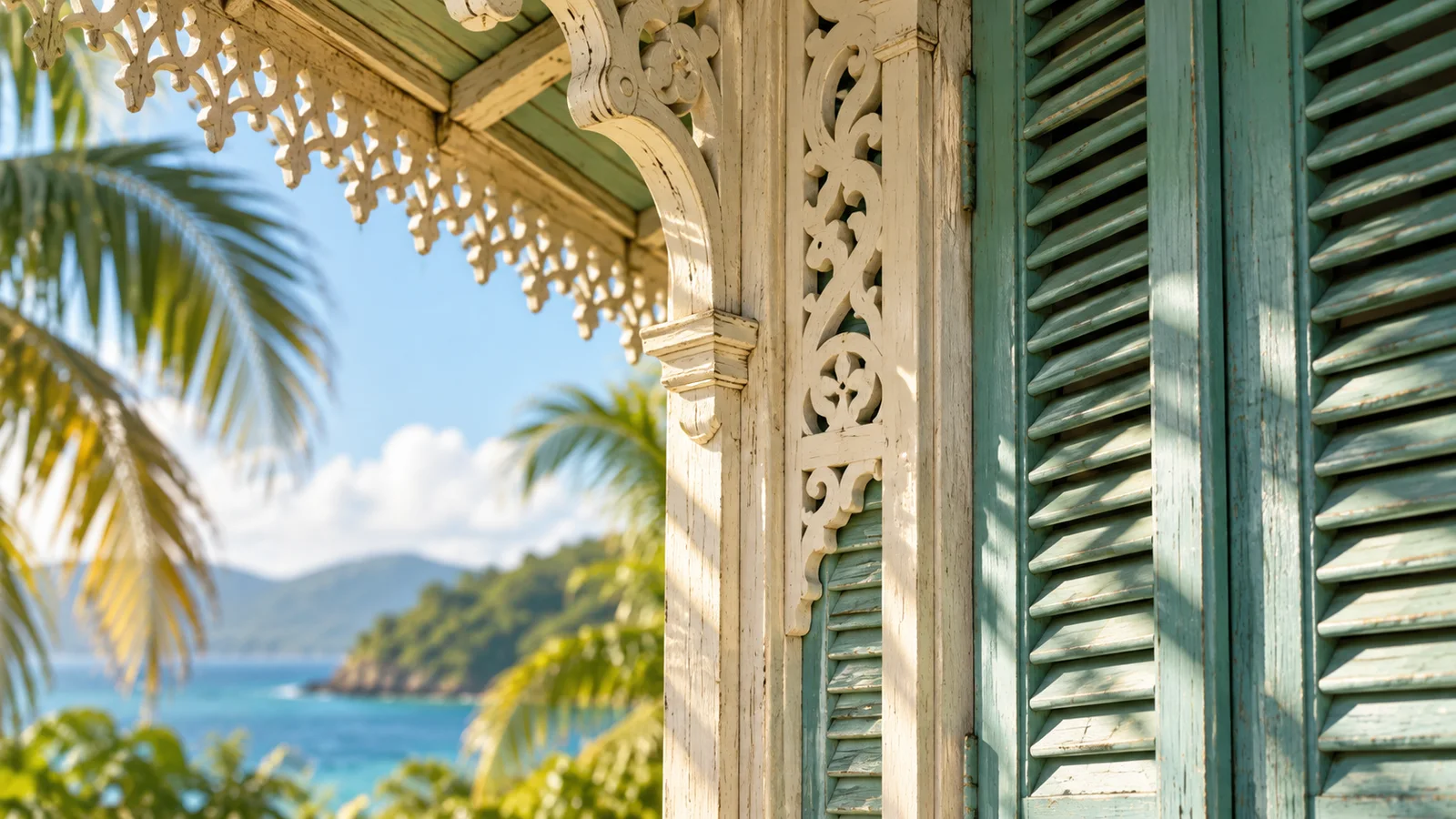
From an appropriate public viewpoint, notice the timber construction, decorative details and relationship between the building and the streets around it. You do not need to enter to begin appreciating why it stands out. Avoid interpreting every feature as a verified symbol or calling the building a museum simply because it interests visitors. Architectural interest and a religious purpose can exist together; neither establishes public opening hours or permission to walk through a doorway.
Language, faith and living heritage
English-language traditions form part of the heritage associated with the Samaná American community. They help explain why a cultural account of this Dominican town can also involve North American migration and religious life. That connection does not mean every resident speaks English, or that visitors should expect the same language in every setting. Names and expressions are an invitation to learn, not proof that a place belongs outside the Dominican Republic.
Treat religious practice as part of present-day community life rather than a performance arranged for travellers. If you are interested in language, music or family history, ask whether an appropriate local guide can provide informed interpretation in your preferred language. Do not expect strangers to recount their ancestry, sing or pose for a photograph. A respectful conversation depends on willingness; no personal testimony or encounter is promised by visiting a landmark.
Connect culture with a meal without inventing a single origin
A meal can make room for conversation about the place you are visiting. Ask what is prepared locally, what a dish contains and how it is served, without assuming one ingredient proves a single cultural origin. Food traditions can have several influences and change between households. Describing every coconut dish as the direct product of one migration would flatten the region’s wider culinary history into an explanation the menu alone cannot support.
Our guide to Samaná food and dining covers dishes, ordering and meals around the main towns. Use it to choose the food side of your visit rather than expecting this article to act as a restaurant directory. Leave time for lunch separately from any church visit, and confirm what is available on your date. A meal, a conversation and access to a cultural site are different arrangements.
Plan a respectful visit rather than assuming entry
Separate seeing the exterior from permission to go inside. Confirm current access directly or through the organiser before making an interior visit central to your day. Ask about appropriate clothing, photography and any activity taking place at the time. A religious service is not automatically a sightseeing opportunity, and an unlocked door is not an invitation to interrupt. Follow the instructions given on site, even if an older travel description suggests a different arrangement.
Keep voices low, leave entrances clear and ask before photographing worshippers or private activity. Do not assume a donation, entrance charge or scheduled guided visit exists; establish the actual terms if access is offered. For anyone with access needs, ask about the precise approach, steps and doorway rather than reading the word central as a promise of easy entry. An exterior-only stop should be an agreed possibility, not a disappointing surprise.
Fit the cultural stop around your actual starting point
If you are staying in town, compare the proposed approach with your accommodation and the rest of the day. From Las Terrenas or Las Galeras, include the outward road journey and a clear return arrangement. The guide to getting around Samaná explains those transport decisions. Do not assume a boat excursion’s hotel pickup also covers a separate cultural visit before or after it.
Cruise visitors should begin with the ship’s actual arrangements for getting ashore and returning. The Samaná cruise-port guide explains why anchorage arrival, tender operations and all-aboard time are different parts of the plan. A cultural interest does not remove those constraints. Choose the town time that genuinely fits, and do not promise an interior visit around an unconfirmed landing or a tight return deadline.
Choose interpretation as well as a stop on the route
Before requesting a guided cultural stop, describe what interests you: the migration story, architecture or a broader introduction to town life. Ask who would explain it, in which language and with what access arrangements. A driver, an exclusive vehicle and a guide able to discuss local history are separate services. Neither passing a building nor calling an outing private establishes the quality or availability of that interpretation.
The existing private Samaná tour enquiry is the relevant route for discussing a tailored town stop. Share your accommodation or arrival point, available time, interests and walking needs. Request a proposal naming the feasible stops, guide arrangements, inclusions and return. This article does not announce a dedicated heritage tour or guarantee entry to La Churcha; it helps you ask for a day whose cultural content is clear.
Can you visit inside La Churcha?
An interior visit depends on the access and permission available at the time. Confirm it before booking anything that relies on entry, and respect services or private activities. An exterior view and an organised visit inside are different experiences. This guide does not establish opening hours, admission prices or a standing public-tour schedule.
Is this the same as the general Samaná town visit?
It adds a cultural focus to a town visit rather than replacing the wider plan. You may want time for the waterfront, centre and a meal as well as learning about La Churcha. Decide what matters most and agree the actual route. Understanding the history does not require fitting every town attraction into the same outing.
Can you combine a cultural stop with a bay excursion?
Ask about the complete schedule and the actual harbour, road transport and return. Town time may be possible within a particular proposal, but it is not automatically included in a whale, island or national-park booking. An interior church visit also needs its own confirmation. Keep the main departure and return commitments clear before adding a stop.
Give Samaná’s cultural history a place in your day.
Share your starting point, available time and cultural interests. Compare the existing experiences and ask whether a clearly described town stop and suitable interpretation can be arranged.
Explore Samaná experiences